

Gonur Depe, Turkmenistan – Ancient City of Margiana
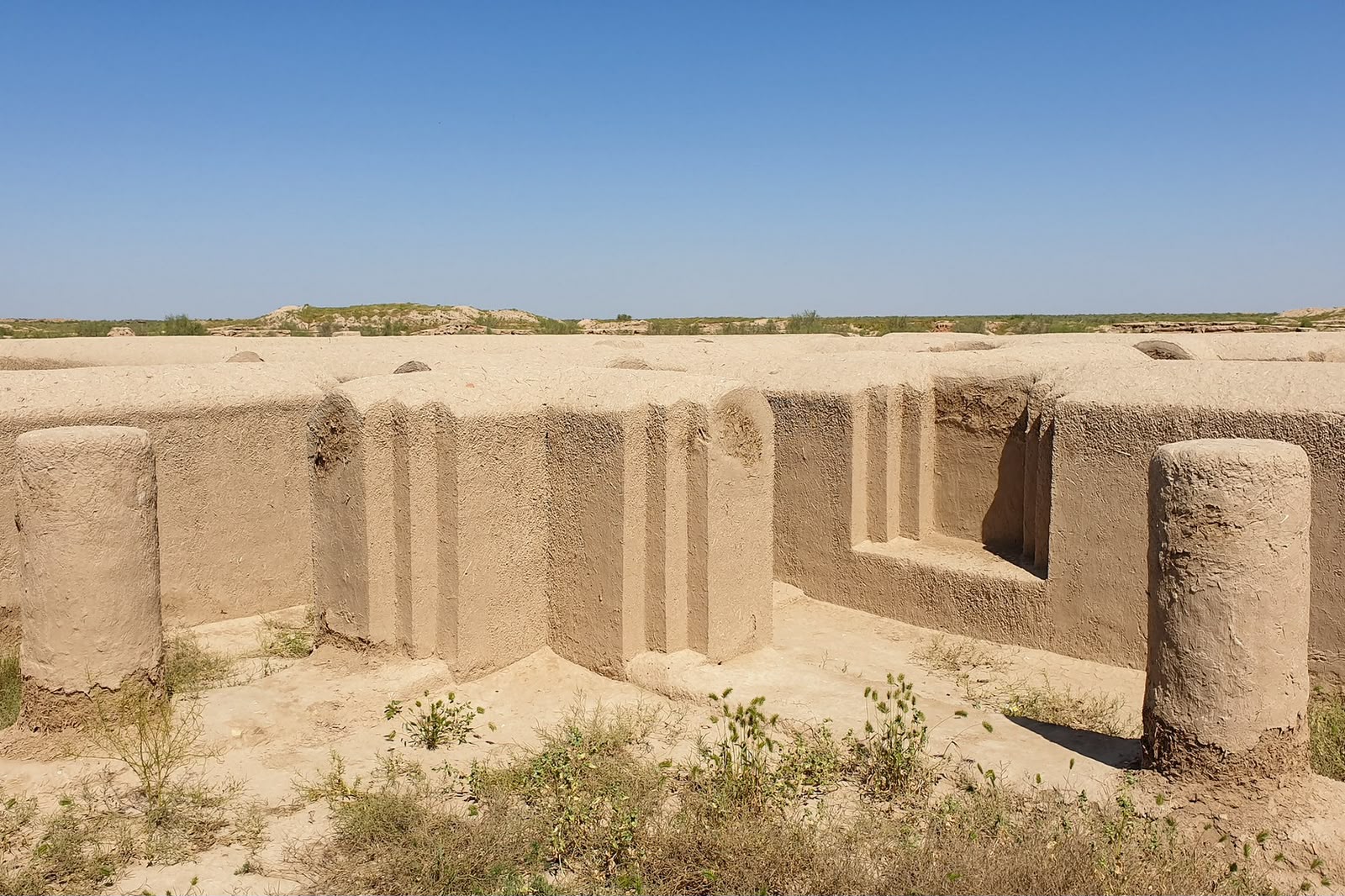
Deep in the desert north of Mary lies Gonur Depe, one of the most extraordinary archaeological sites in Turkmenistan. More than four thousand years ago, this remote landscape was home to a thriving Bronze Age community surrounded by the fertile branches of the ancient Murghab River.
Today, visitors walk through the remains of monumental mud-brick buildings, courtyards, burial areas and ceremonial spaces surrounded by open desert. With almost no modern development nearby, Gonur Depe has a sense of isolation that makes the ancient ruins feel especially powerful.
For travellers interested in archaeology and the earliest civilizations of Central Asia, Gonur Depe offers an experience very different from the medieval monuments of Merv or the modern architecture of Ashgabat.
History of Gonur Depe and Ancient Margiana
Gonur Depe developed during the Bronze Age within the fertile oasis of ancient Margiana, where communities used the waters of the Murghab River to create settlements in what is now the Karakum Desert.
The site became one of the largest and most complex settlements associated with the civilization archaeologists today call the Bactria–Margiana Archaeological Complex (BMAC). Its monumental architecture, organized residential areas, sophisticated craftsmanship and extensive burial grounds reveal a society that was far more developed than the empty desert surrounding the ruins might suggest today.
Gonur Depe became widely known through the work of archaeologist Viktor Sarianidi, who began exploring the site in the 1970s. Decades of excavations uncovered thousands of objects, including ceramics, jewellery, seals, metalwork and decorative pieces that helped researchers better understand Bronze Age life in Central Asia.
The discoveries also revealed connections with cultures beyond Margiana, showing that the inhabitants of Gonur were part of wider networks of exchange reaching across ancient Central and South Asia.
For travellers, this history gives Gonur Depe its special character: the ruins are evidence that an advanced urban society flourished here thousands of years before the famous cities of the Silk Road appeared.
What to See at Gonur Depe
Gonur Depe is a large archaeological landscape rather than a single monument. Visitors move between the remains of fortified compounds, monumental buildings, residential areas and burial grounds that gradually reveal how the ancient settlement was organized.
Among the most striking remains are the central palace complex and ceremonial structures, surrounded by thick mud-brick walls, courtyards and rooms. Their scale provides a glimpse of the authority and organization that once existed within the settlement.
Archaeologists have also identified areas connected with ritual activity, including spaces where fire and offerings appear to have played an important role. Some researchers have compared these discoveries with later Iranian religious traditions, including Zoroastrian practices, although the exact relationship remains debated.
The ancient necropolis is another important part of Gonur’s story. Excavations of burial areas produced jewellery, pottery, seals and unusual works of art, providing valuable clues about social status, craftsmanship and beliefs surrounding death.
What makes the visit especially memorable, however, is the setting. Ancient walls rise directly from the open desert, with few modern distractions around them. Walking through Gonur Depe feels less like visiting a conventional tourist attraction and more like exploring an archaeological site still revealing its secrets.
How to Visit Gonur Depe
Gonur Depe lies around 60–70 kilometres north of Mary, beyond the main paved roads and deep within the landscape of the ancient Murghab oasis. The final part of the journey crosses rough desert tracks, so suitable transportation and an experienced driver are important.
Darvaza Tour can arrange a private excursion from Mary with transportation, a local guide and the practical arrangements needed for visiting this remote archaeological site. A guide is particularly valuable at Gonur Depe because many of the surviving structures are foundations and mud-brick walls whose original purpose is much easier to understand with explanation.
Visitors should allow enough time for both the journey and exploration of the ruins. Comfortable walking shoes, drinking water, a hat and sun protection are recommended, as the archaeological area is exposed and offers little shade.
A visit can also be combined with Ancient Merv, allowing travellers to experience two completely different chapters of the Murghab region’s history — the Bronze Age civilization of Gonur Depe and one of the great cities of the Silk Road.
Ready to discover Gonur Depe?
Discover one of Turkmenistan’s most remarkable Bronze Age sites with Darvaza Tour.
We can arrange a private trip from Mary and combine your visit with Ancient Merv or other historical sites in the region.