

Ancient Merv, Turkmenistan – Legendary City of the Silk Road
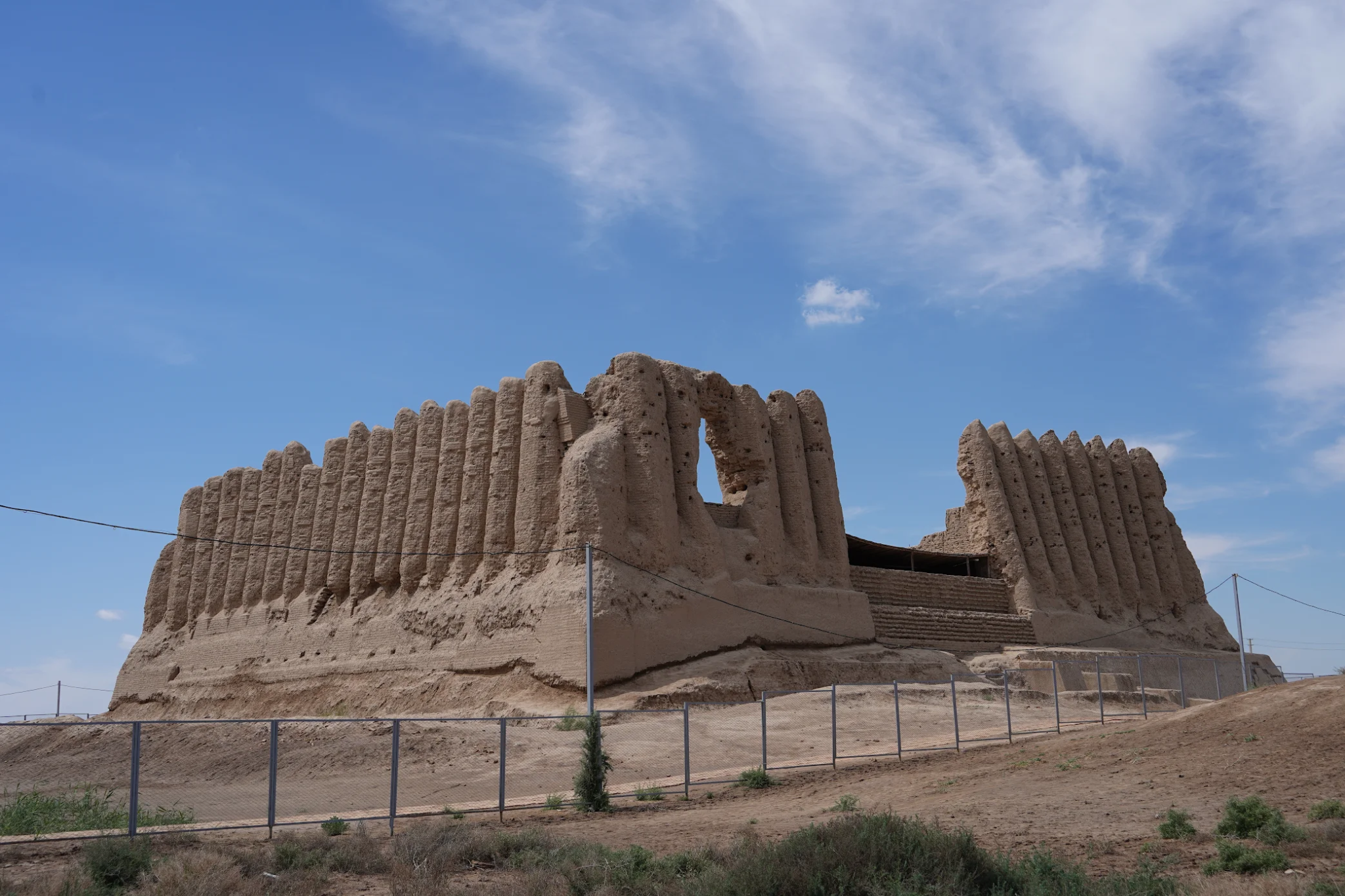
Ancient Merv is one of Turkmenistan’s most important historical treasures and one of the great archaeological sites of Central Asia. Once a major city on the Great Silk Road, Merv connected merchants, scholars and cultures travelling between Persia, Central Asia and the wider ancient world.
Over many centuries, different cities rose and disappeared within the Merv oasis, leaving behind an extraordinary landscape of fortresses, mausoleums, city walls and monumental ruins.
Today, the Ancient Merv Historical and Cultural Park, recognized as a UNESCO World Heritage Site, allows visitors to explore the remains of several civilizations in one remarkable location.
For travellers interested in history and the Silk Road, Merv is one of the essential places to visit in Turkmenistan.
History of Ancient Merv
The history of Merv stretches back thousands of years. Thanks to its position in the fertile Murghab River oasis, the area became an important place for settlement, agriculture and trade long before the famous Silk Road reached its height.
Over the centuries, Merv did not remain a single city. New urban centers were built beside the ruins of earlier ones, creating the remarkable archaeological landscape visitors see today. Ancient settlements such as Erk Kala, Gyaur Kala and later Sultan Kala reflect different periods in the city’s long history.
Merv passed through the hands of powerful empires and cultures, including the Achaemenids, Greeks, Parthians, Sasanians and Arab Caliphate. Its strategic position between Persia and Central Asia helped it grow into an important center of commerce, religion and learning.
The city reached one of its greatest periods of prosperity under the Great Seljuk Empire in the 11th and 12th centuries. Merv became a major political and cultural center, attracting merchants, scholars, craftsmen and travellers from across the Islamic world. The mausoleum of Sultan Sanjar, still standing today, remains one of the strongest reminders of this era.
In the 13th century, Merv suffered catastrophic destruction during the Mongol invasion. Although settlements later returned to the oasis, the city never fully regained its former importance.
Today, the ruins of Ancient Merv preserve the traces of many civilizations within one vast landscape, allowing visitors to follow the rise, transformation and decline of one of Central Asia’s most important historic cities.
What to See at Ancient Merv
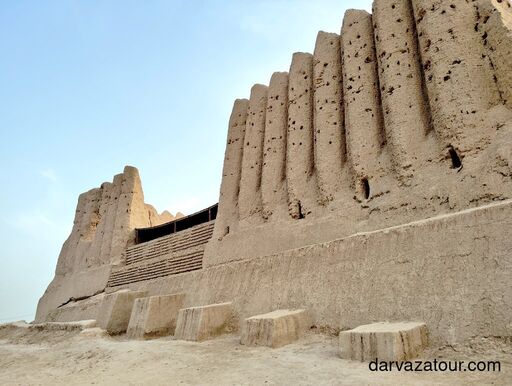
Ancient Merv is not a single monument, but a vast archaeological landscape made up of several historic cities that developed one after another over many centuries.
One of the oldest parts of the site is Erk Kala, a massive fortified settlement whose high earthen walls still dominate the surrounding landscape. Nearby lies Gyaur Kala, which became an important urban center during the Parthian and Sasanian periods.
Another major area is Sultan Kala, the great medieval city of the Seljuk era. Its most famous monument is the Mausoleum of Sultan Sanjar, one of the best-preserved and most impressive buildings in Merv. The structure remains a powerful symbol of the city’s importance during the 12th century.
Visitors can also explore the remains of Kyz Kala, known for its distinctive corrugated walls, as well as ancient defensive structures, mausoleums, religious buildings and sections of old city walls spread across the archaeological park.
Because the site covers such a large area, each part of Merv feels different. Together, these ruins allow visitors to move through several historical periods in one journey and see how the city changed over time.
What makes Merv especially memorable is its scale. Standing among the ruins, surrounded by open desert and centuries-old walls, it is easy to understand why this oasis once became one of the great cities of Central Asia.
Merv and the Great Silk Road
For centuries, Merv was one of the great stopping points on the Silk Road, linking Persia, Central Asia and the trade routes stretching across Eurasia.
Caravans arrived here carrying silk, spices, textiles, precious goods and new ideas. But Merv was much more than a place to rest. It grew into a major center of trade, learning and culture, attracting merchants, craftsmen, scholars and travellers from many different regions.
Its position in the fertile Murghab oasis made Merv especially important. Surrounded by desert, the city offered water, food and protection before caravans continued their long journeys east or west.
Today, the ruins make this history surprisingly easy to imagine. Walking through the remains of ancient walls, fortresses and monumental buildings, visitors can picture the caravans that once crossed this landscape and helped connect distant cultures.
For travellers interested in the Silk Road, Merv is one of the best places in Turkmenistan to experience the scale and atmosphere of this remarkable chapter of Central Asian history.
How to Visit Ancient Merv
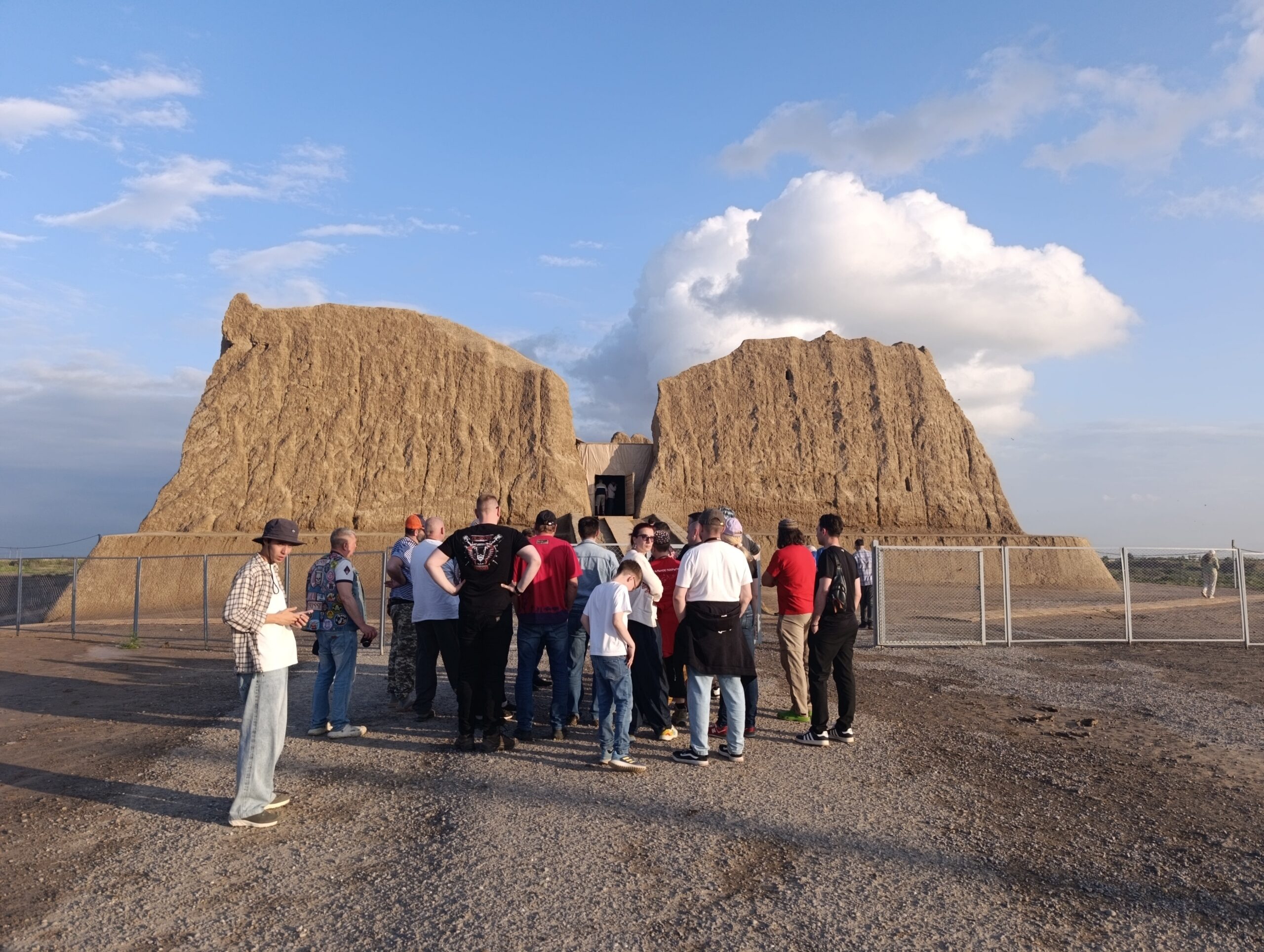
Ancient Merv is located around 30 kilometres from Mary, making it one of the easiest major archaeological sites in Turkmenistan to visit as a day trip from the city.
Most travellers explore Ancient Merv with a local guide and private vehicle. Darvaza Tour can arrange transportation from Mary, professional guiding and a route covering the most important monuments of the archaeological park.
A typical visit usually takes several hours, depending on how much of the site you want to explore. Travellers interested in history may prefer to spend longer walking through the different ancient city areas, while a shorter visit can focus on the main highlights such as Erk Kala, Gyaur Kala, Sultan Kala, Kyz Kala and the Mausoleum of Sultan Sanjar.
The most comfortable seasons to visit are spring and autumn, when temperatures are milder. During the warmer months, it is best to start early in the day and bring plenty of water, sun protection, a hat and comfortable walking shoes. Much of the archaeological site is open and exposed, with limited shade.
Ancient Merv & Gonur Depe
For travellers interested in archaeology and ancient civilizations, combining Ancient Merv and Gonur Depe creates one of the most fascinating historical journeys in Turkmenistan.
The two sites represent very different periods of the region’s past. Gonur Depe takes visitors back to the Bronze Age and the civilization of ancient Margiana, while Merv reveals the later rise of a major Silk Road city shaped by Persian, Arab, Seljuk and other cultures.
Visiting both places makes it possible to see how the Murghab oasis developed across thousands of years — from early urban settlements and ritual centers to one of the great cities of medieval Central Asia.
Because both sites are reached from Mary, they can be included in the same regional itinerary with a local guide and driver. Depending on the schedule, travellers may visit Merv and Gonur Depe on separate days or combine them as part of a longer journey through southern Turkmenistan.
For history lovers, this combination offers something especially valuable: the chance to explore two very different civilizations within the same landscape and understand just how deep the history of the Mary region really is.
Ready to discover Ancient Merv?
Explore one of the great cities of the Silk Road with Darvaza Tour and add Gonur Depe or other historical sites to your journey.