

CENTRAL ASIA TRAVEL BLOG
10 Best Things to Do in Turkmenistan
Turkmenistan is one of Central Asia’s most distinctive destinations, combining ancient Silk Road cities, dramatic desert landscapes, modern architecture and unique cultural traditions.
From the glowing Darvaza Gas Crater and the white-marble avenues of Ashgabat to the ruins of Ancient Merv and the colorful cliffs of Yangykala Canyon, the country offers experiences that are very different from anywhere else in the region.
Whether you are planning a short visit or a longer journey across the country, this guide highlights 10 of the best things to do in Turkmenistan and the places most worth including in your itinerary.
1. Visit the Darvaza Gas Crater
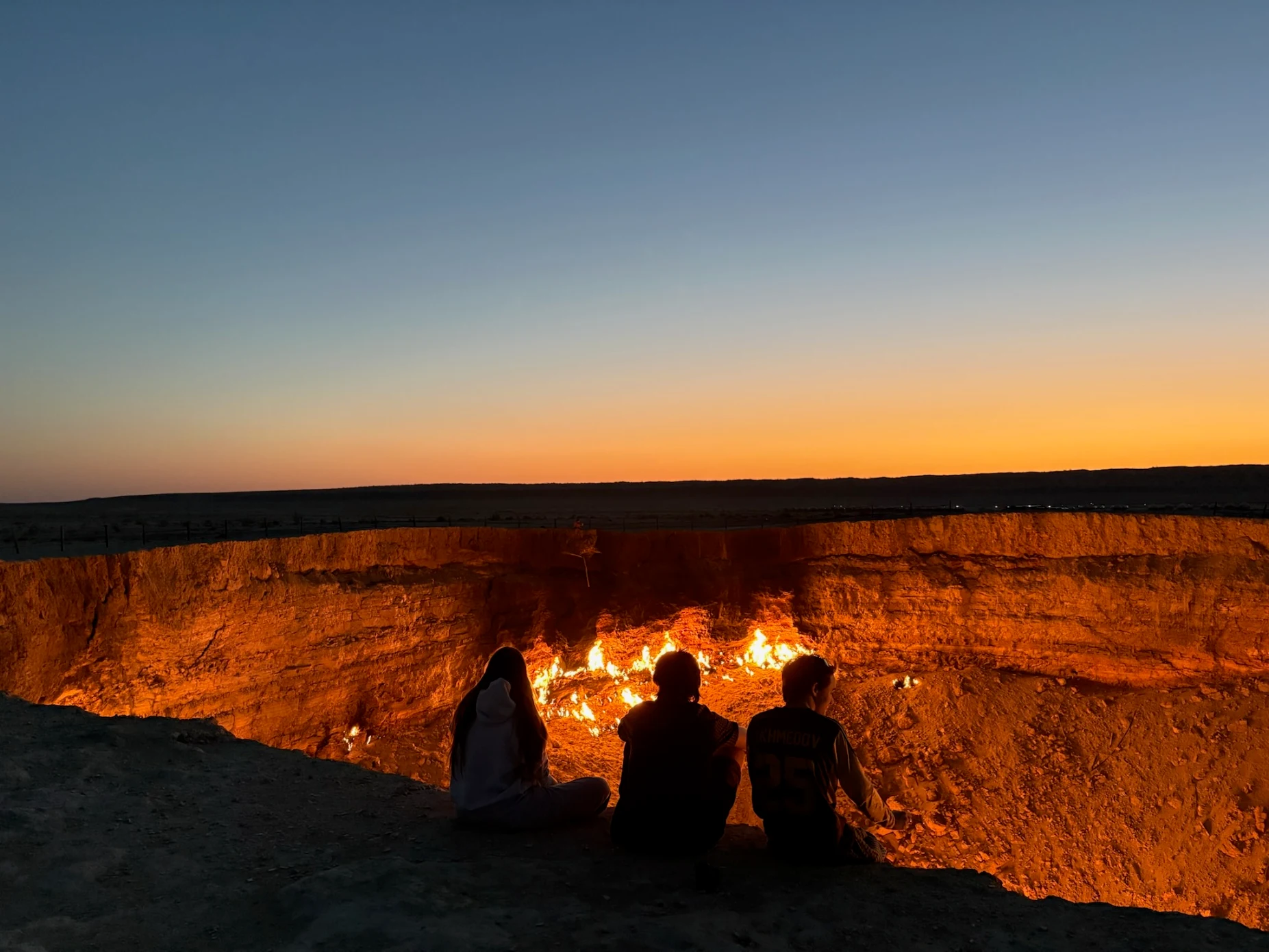
The Darvaza Gas Crater is one of the most recognizable sights in Turkmenistan and one of the country’s most memorable desert experiences. Located deep in the Karakum Desert, the crater is known for the natural-gas flames that burn across its floor and create a dramatic orange glow after sunset.
The experience changes significantly throughout the day. In daylight, visitors can better appreciate the scale of the crater and the surrounding desert landscape. Around sunset, the flames become increasingly visible, while after dark the glowing crater stands out against the black desert surroundings.
Many travelers choose to stay overnight near Darvaza in a traditional-style yurt camp. This makes it possible to remain at the crater after sunset, enjoy dinner in the desert and experience the quieter atmosphere of the Karakum at night.
Darvaza can be included in itineraries from Ashgabat as well as overland journeys connecting Turkmenistan with Uzbekistan through the Shavat or Farab border crossings.
Best for: desert landscapes, sunset views, night photography and overnight experiences.
2. Explore Ashgabat
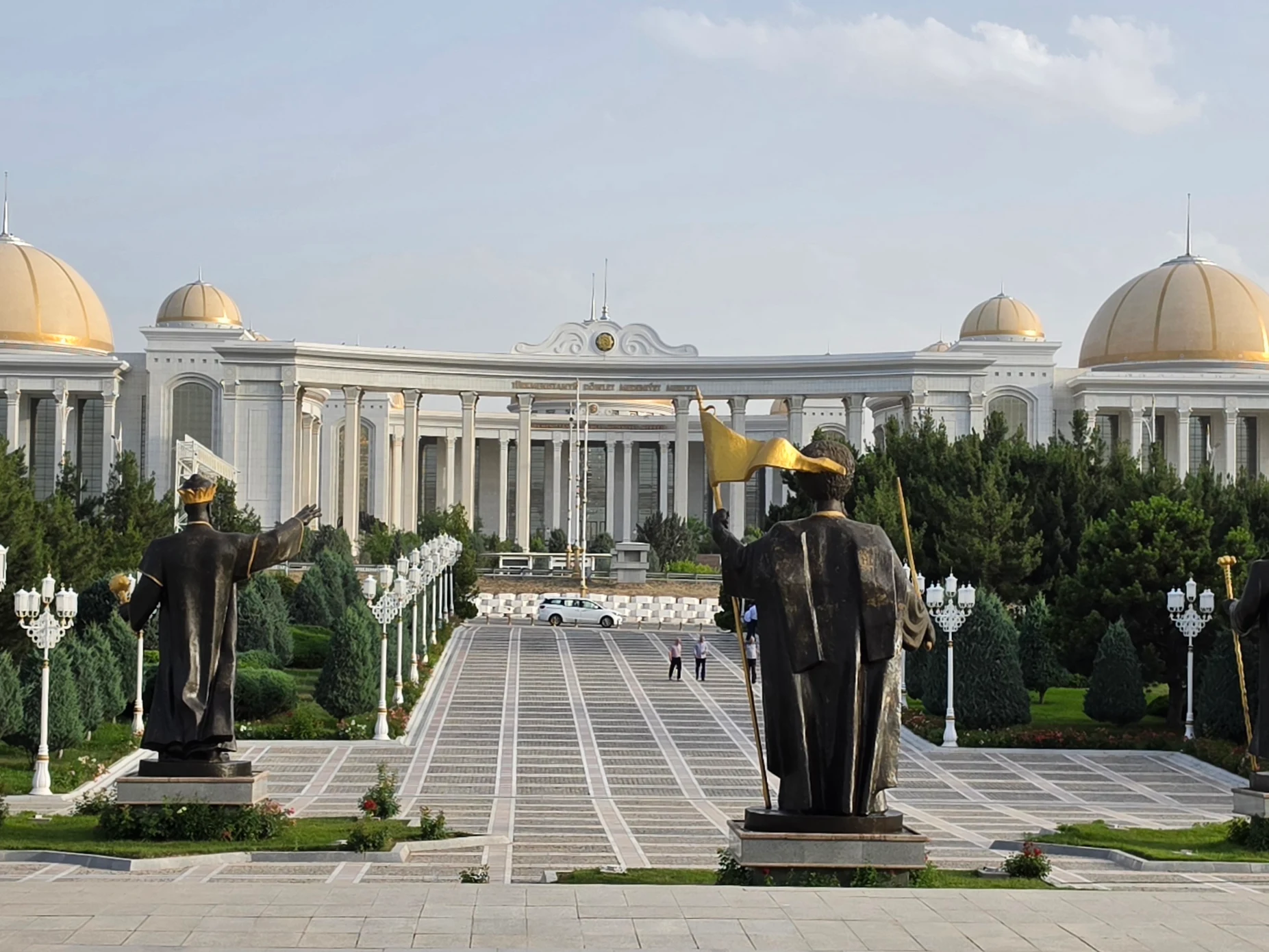
Ashgabat, the capital of Turkmenistan, is unlike any other city in Central Asia. Its wide avenues, monumental architecture and extensive use of white marble create a striking urban landscape that feels very different from the historic Silk Road cities elsewhere in the region.
Many of the city’s best-known landmarks are spread across large ceremonial districts. Highlights include the Independence Monument, Neutrality Arch, the Wedding Palace, Constitution Monument, Alem Ferris Wheel and the Olympic Village. The city is especially impressive in the evening, when many buildings and monuments are illuminated.
Ashgabat also offers a more traditional side. Travelers can visit the Russian Bazaar, explore local museums or see major religious and cultural landmarks such as the Ertugrul Gazi Mosque and the Ruhy Mosque.
For many visitors, Ashgabat is both an arrival point and an important part of the journey itself, offering a completely different experience from Turkmenistan’s desert landscapes and ancient archaeological sites.
Best for: architecture, city sightseeing, monuments and cultural attractions.
3. Discover Ancient Merv
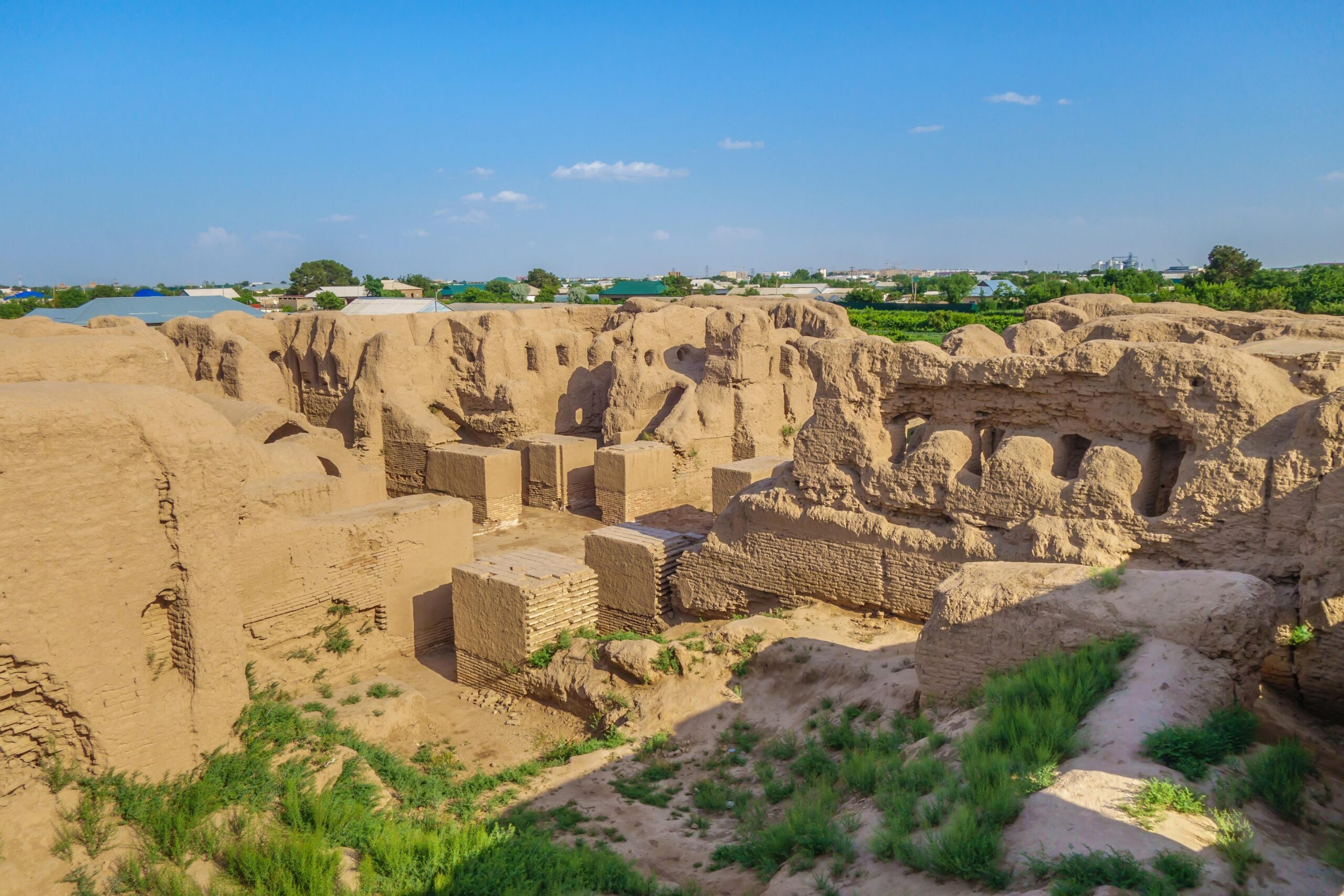
Ancient Merv is one of the most important archaeological sites in Turkmenistan and one of the great historic cities of the Silk Road. Located near modern Mary, the site preserves the remains of several settlements that developed here over many centuries.
At different periods, Merv was a major centre of trade, culture and political power. Today, visitors can explore a vast archaeological landscape that includes Erk-Kala, Gyaur-Kala, the Kyz-Kala fortresses and the impressive Mausoleum of Sultan Sanjar.
What makes Merv especially interesting is its scale. Rather than visiting a single monument, travelers move through a large historical landscape where different parts of the ancient city reveal different periods of its development.
Merv is particularly rewarding for travelers interested in archaeology, Silk Road history and the civilizations that once connected Central Asia with Persia and the wider region.
Best for: archaeology, Silk Road history, ancient architecture and cultural heritage.
4. Visit Kunya-Urgench
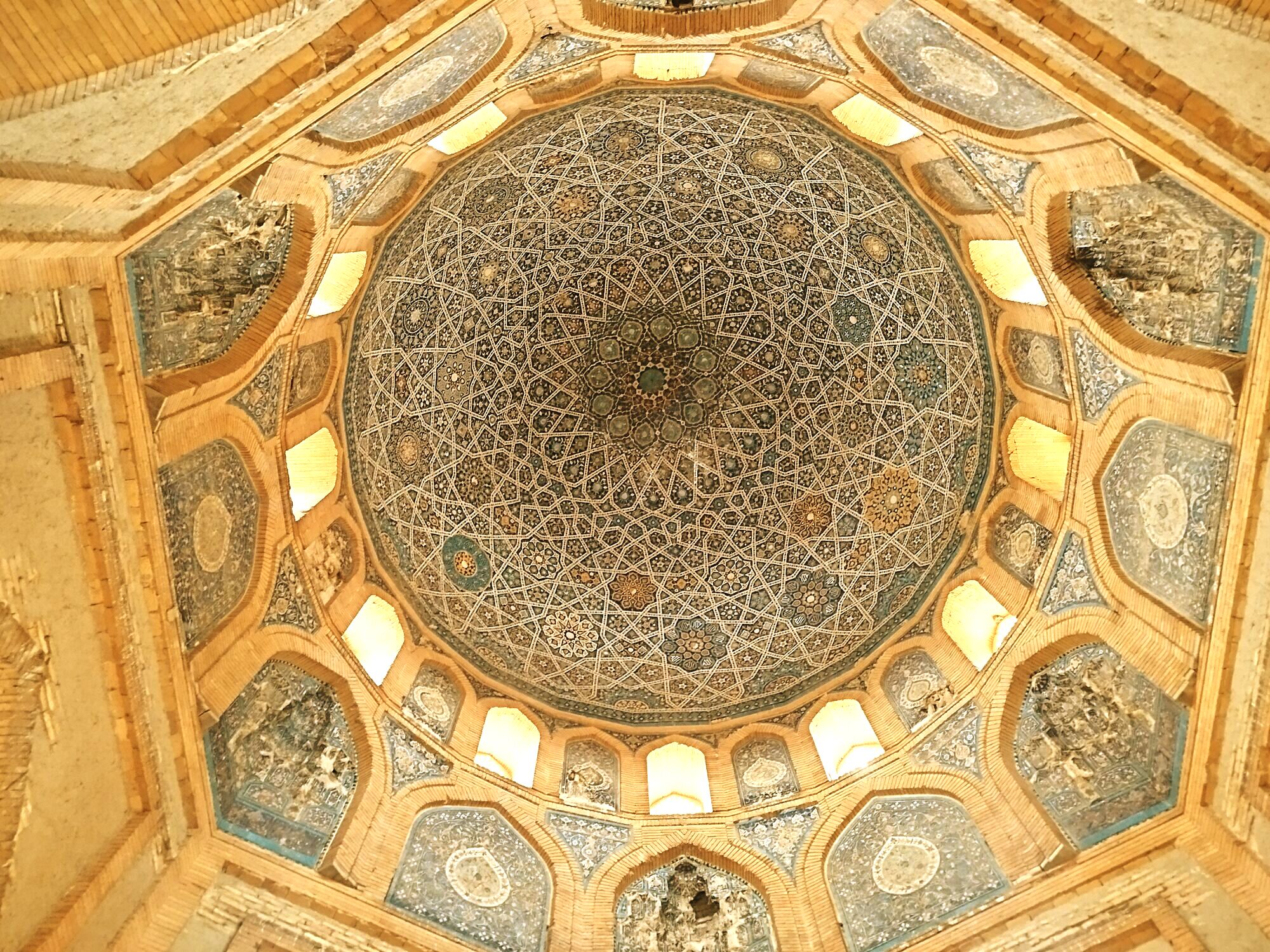
Kunya-Urgench is one of Turkmenistan’s most important historic destinations and a UNESCO World Heritage Site. Located in the north of the country, close to the border with Uzbekistan, it was once a major centre of the Khorezm region and an important stop on routes connecting Central Asia with Persia and the wider Silk Road.
Today, the archaeological area contains monuments from different periods of the city’s history. Among the most recognizable are the Kutlug Timur Minaret, the Turabek Khanum Mausoleum and several medieval mausoleums and religious structures spread across the site.
Unlike a compact historic centre, Kunya-Urgench is explored as a collection of monuments across a wider area. This gives visitors a sense of the scale and importance the city once had while allowing time to examine individual examples of medieval architecture.
Kunya-Urgench is especially convenient for travelers entering or leaving Turkmenistan through the Shavat border near Khiva, and it combines naturally with an onward journey toward the Darvaza Gas Crater.
Best for: UNESCO heritage, medieval architecture, Silk Road history and overland journeys from Khiva.
5. See Yangykala Canyon
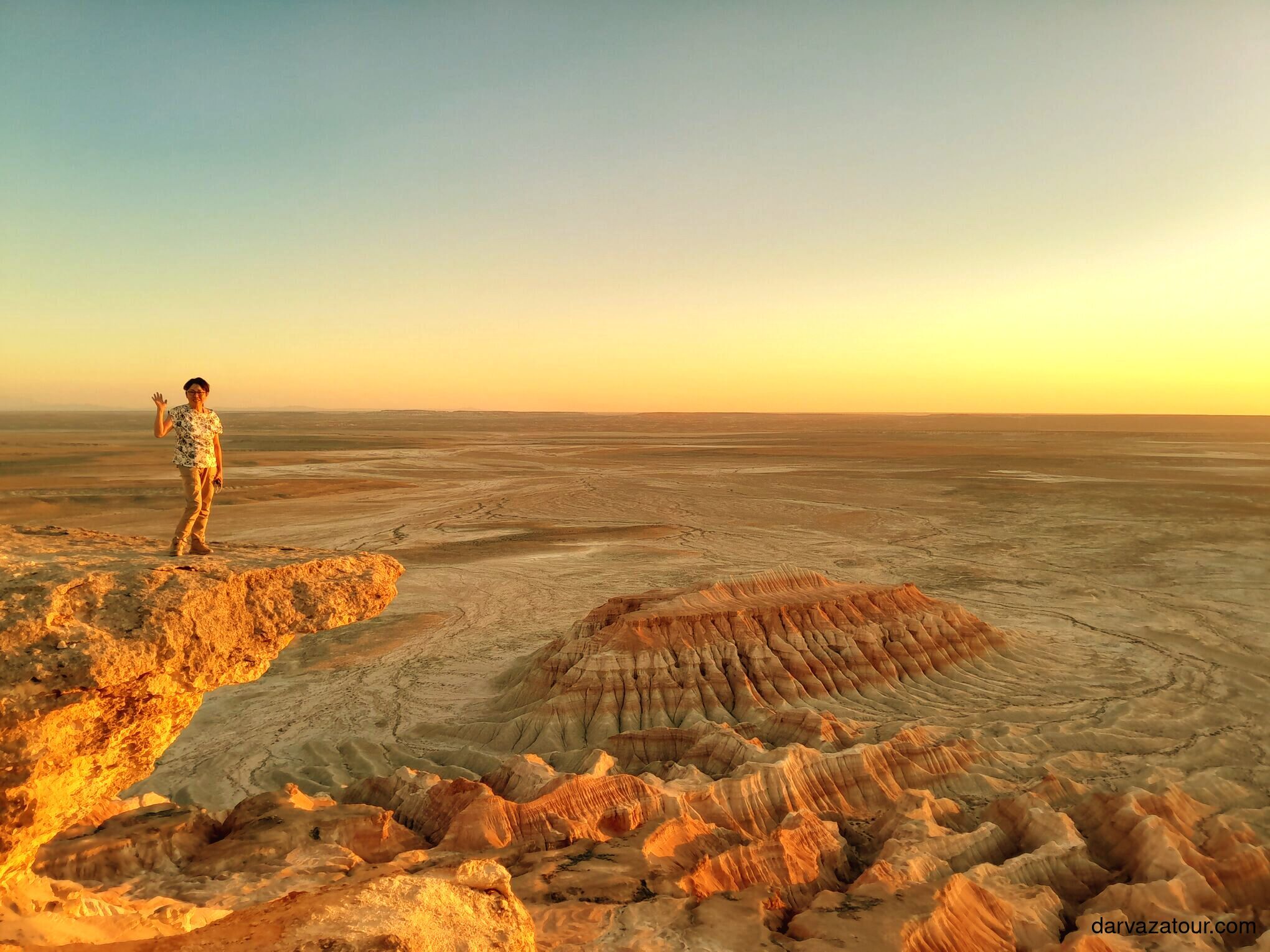
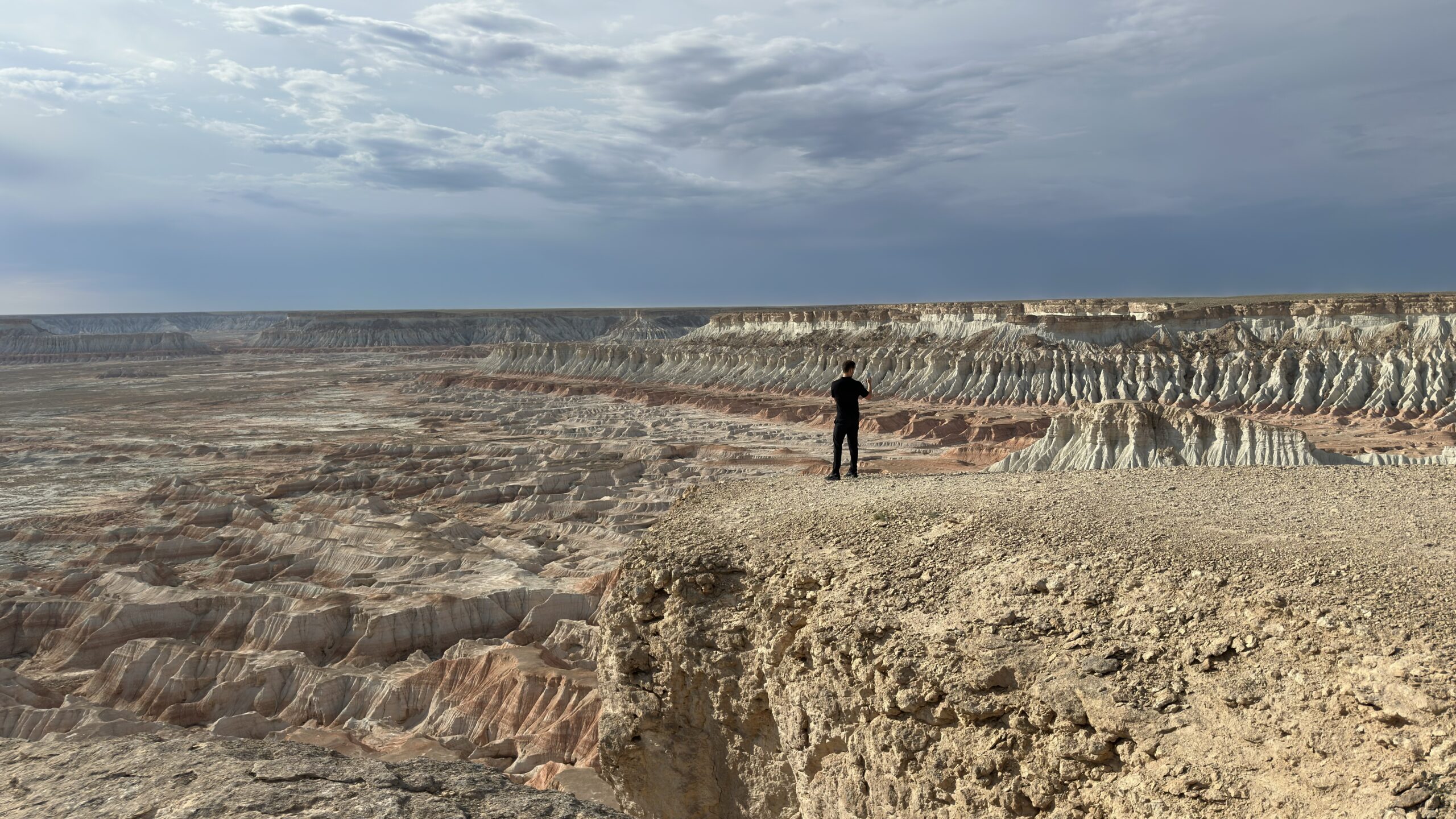
Yangykala Canyon is one of Turkmenistan’s most dramatic natural landscapes. Located in the western part of the country, the canyon is known for its layered cliffs in shades of white, pink, red and orange, shaped over millions of years by erosion.
The landscape is vast and remote, with viewpoints overlooking deep valleys and unusual rock formations stretching toward the horizon. Because of its isolated location, reaching Yangykala usually requires a longer overland journey, often combined with Turkmenbashi and other destinations in western Turkmenistan.
Late afternoon is especially attractive for photography, when lower sunlight brings out the colors and textures of the canyon walls. Weather and light can change the appearance of the landscape significantly, making each visit feel different.
For travelers who enjoy remote scenery and places far from conventional tourist routes, Yangykala is one of the most memorable natural attractions in Turkmenistan.
Best for: dramatic landscapes, photography, remote travel and geological scenery.
6. Meet the Akhal-Teke Horses
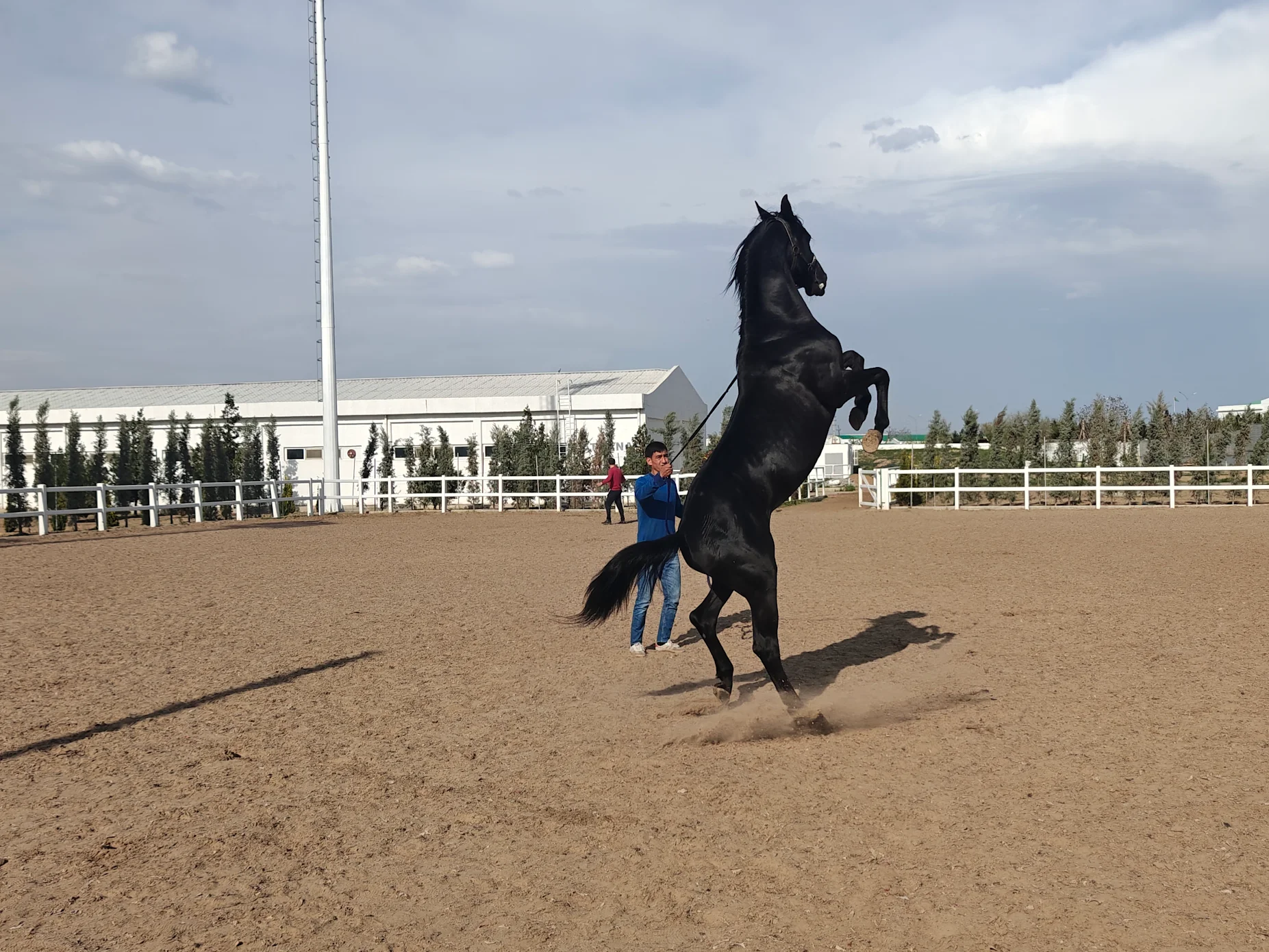
The Akhal-Teke is one of Turkmenistan’s most famous cultural symbols and one of the world’s most distinctive horse breeds. Known for its endurance, elegant build and characteristic coat that can appear almost metallic in sunlight, the breed has been closely associated with the history and traditions of the Turkmen people for centuries.
Travelers visiting Ashgabat can include a visit to an Akhal-Teke horse farm, where it is possible to see the horses at close range and learn more about their breeding, training and cultural importance in Turkmenistan.
For many visitors, seeing an Akhal-Teke in person is very different from simply viewing photographs. Their slender proportions, movement and unusual coat colors make them particularly striking, especially in natural light.
Depending on the farm and arrangements for the visit, additional experiences such as seeing training sessions or horse riding may also be possible. These should normally be arranged in advance.
Best for: Turkmen culture, horse lovers, photography and experiences near Ashgabat.
7. Visit Kow-Ata Underground Lake
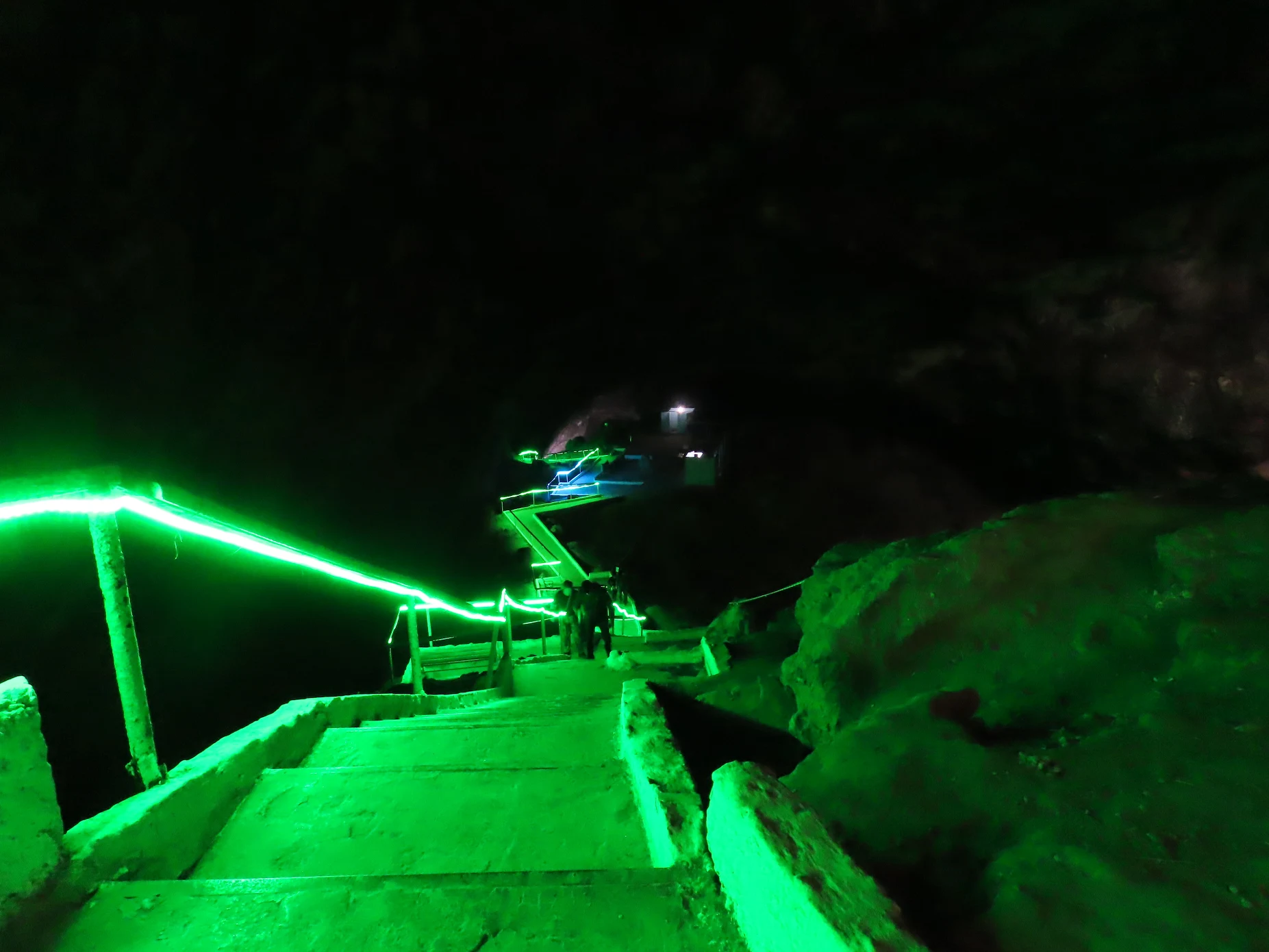
Kow-Ata is one of Turkmenistan’s most unusual natural attractions — an underground lake located inside a large cave near Baherden, west of Ashgabat. Visitors descend into the cave by a long staircase before reaching the warm mineral-rich water below.
The atmosphere inside is very different from the desert landscape outside. As you descend, the light gradually fades, the air becomes warmer and the walls of the cave create a dramatic enclosed setting around the lake.
Kow-Ata is often included as a day trip from Ashgabat and can also be combined with a journey toward Nokhur and the Kopet Dag Mountains. Travelers who plan to swim should bring appropriate clothing and be prepared for humid conditions inside the cave.
Even for visitors who do not swim, the cave itself makes Kow-Ata an interesting stop because it offers a completely different natural environment from most other attractions in Turkmenistan.
Best for: unusual natural attractions, swimming, cave landscapes and day trips from Ashgabat.
8. Explore Nokhur
Nokhur is a mountain settlement in southwestern Turkmenistan, located in the foothills of the Kopet Dag Mountains. The area offers a very different atmosphere from Ashgabat and the Karakum Desert, with rocky landscapes, traditional homes and a quieter rural setting.
The journey to Nokhur is part of the experience itself, as the road leaves the plains and gradually enters a more mountainous landscape. Visitors can see local architecture, small village streets and viewpoints over the surrounding valleys and hills.
Nokhur is often included in itineraries together with Kow-Ata, allowing travelers to experience both an underground natural attraction and a mountain settlement during the same journey from Ashgabat.
For travelers interested in seeing a more rural side of Turkmenistan, Nokhur provides a useful contrast to the monumental architecture of the capital and the country’s large archaeological sites.
Best for: mountain scenery, rural landscapes, local culture and day trips from Ashgabat.
9. Explore Koytendag
Koytendag is one of Turkmenistan’s most remote and distinctive natural regions, located in the eastern part of the country near the border with Uzbekistan. The landscape is very different from the open desert, with mountains, rocky valleys, gorges and unusual geological formations.
One of the best-known attractions in the area is the Dinosaur Plateau, where fossilized dinosaur footprints can be seen preserved in the rock. The site gives visitors a rare opportunity to combine dramatic mountain scenery with one of Turkmenistan’s most unusual natural and paleontological attractions.
The wider Koytendag region also offers caves, mountain landscapes and remote valleys that make it particularly interesting for travelers looking beyond the country’s more familiar Silk Road sites and desert routes.
Because of its isolated location, visiting Koytendag normally requires additional travel time and works best as part of a longer itinerary through eastern Turkmenistan. For travelers who have enough time, however, it provides a completely different perspective on the country’s geography and natural heritage.
Best for: mountain landscapes, dinosaur footprints, geology, nature and remote travel.
10. Visit Turkmenbashi and the Caspian Coast
Turkmenbashi is Turkmenistan’s main city on the Caspian Sea and a useful base for exploring the country’s western coast. The area offers a very different atmosphere from Ashgabat, the desert interior and the archaeological sites of eastern Turkmenistan.
Nearby Awaza is known for its modern resort zone, long waterfront, hotels and views across the Caspian Sea. For travelers who have already explored the country’s desert and historic destinations, the coast provides a change of scenery and a more relaxed setting.
Turkmenbashi is also an important starting point for journeys deeper into western Turkmenistan, including routes toward Yangykala Canyon. This makes it especially useful as part of a longer itinerary combining coastal landscapes with some of the country’s most dramatic natural scenery.
Depending on the itinerary, travelers can spend time along the waterfront, explore the city and surrounding area, or use Turkmenbashi as an overnight stop before continuing toward Yangykala and other remote destinations in the west.
Best for: Caspian Sea views, coastal landscapes, western Turkmenistan and journeys to Yangykala Canyon.

PLAN YOUR JOURNEY
Ready to Explore Turkmenistan?
Tell us your travel dates and ideas, and our local team will help you plan a journey that fits your route, interests and schedule.