

Ashgabat, Turkmenistan The White Marble City
Golden domes, wide avenues and more white marble than any city on Earth. See Ashgabat's monuments light up on an evening walk, spend a full day on its mosques, museums and bazaars, or add Ancient Nisa and the Akhal-Teke horses for a second day.
A Short History of Ashgabat
Ashgabat looks brand new, but the land around it has been settled for more than two thousand years. Four moments explain the city you see today.
-
3rd century BC
Nisa, the Parthian royal fortress
Long before Ashgabat existed, the Parthians built Nisa, a royal fortress at the foot of the Kopetdag mountains just outside today's city. Its mud-brick walls and halls are now a UNESCO World Heritage Site and an easy half-day trip from the centre.
-
1881
A frontier fortress on the Silk Road
Modern Ashgabat began as a Russian military fort in 1881. The railway arrived a few years later, and the small garrison town grew into the administrative centre of the region. Its name is often translated as “the city of love”.
-
1948
The earthquake
In October 1948 a powerful earthquake destroyed almost the entire city and killed tens of thousands of people. Very little of old Ashgabat survived, which is why you will find almost no historic buildings in the centre today.
-
1991
Independence and the white marble city
After independence in 1991, Ashgabat was rebuilt on a grand scale: white marble buildings, golden domes, wide avenues and monuments to independence and neutrality. In 2013 it entered the Guinness World Records for the highest density of white-marble buildings.
How to Visit Ashgabat
Almost every Turkmenistan tour starts or ends in Ashgabat, so the real question is how much time to give it. Most travellers choose one of three options.
An evening in Ashgabat
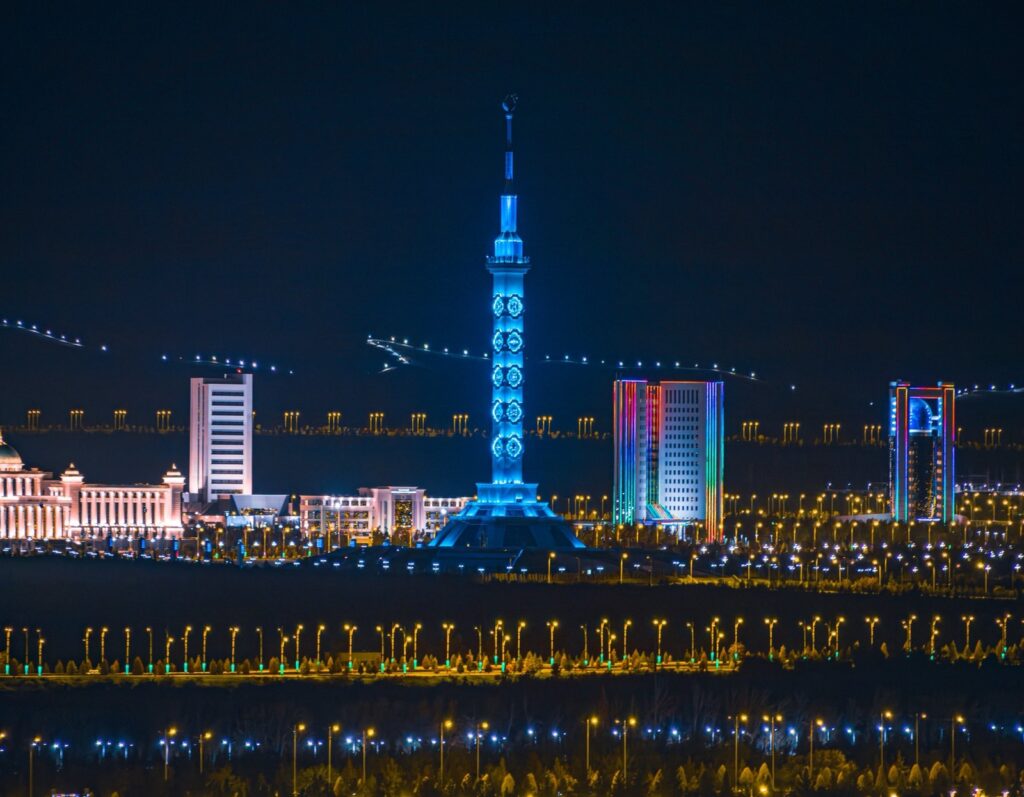
Arrive from Darvaza, Merv or Mary in the afternoon and see the capital when it looks its best: the illuminated Independence and Neutrality monuments and the Wedding Palace glowing against the night sky. Sleep in Ashgabat and continue your route the next morning.
A full day in the city
Independence and Neutrality monuments, the Ertugrul Gazi Mosque, the National Museum and a local bazaar, with lunch at a Turkmen restaurant. Your guide adapts the order to opening hours and your interests — and you can still finish with the evening lights.
Two days with Nisa and the Akhal-Teke horses
Day 1: the city. Day 2: the UNESCO-listed Parthian fortress of Nisa, the vast Turkmenbashi Ruhy Mosque in Gypjak and an Akhal-Teke horse farm — the famous golden horses and the Kopetdag foothills, a real change from the marble city.
All our tours are private, so we plan your time in Ashgabat around your route, dates and interests. See Ashgabat tours ↓
Top Things to See in Ashgabat
From white-marble monuments to a Parthian fortress and the famous golden horses, these are the places most travellers remember. Your guide combines them into a route that fits your time.

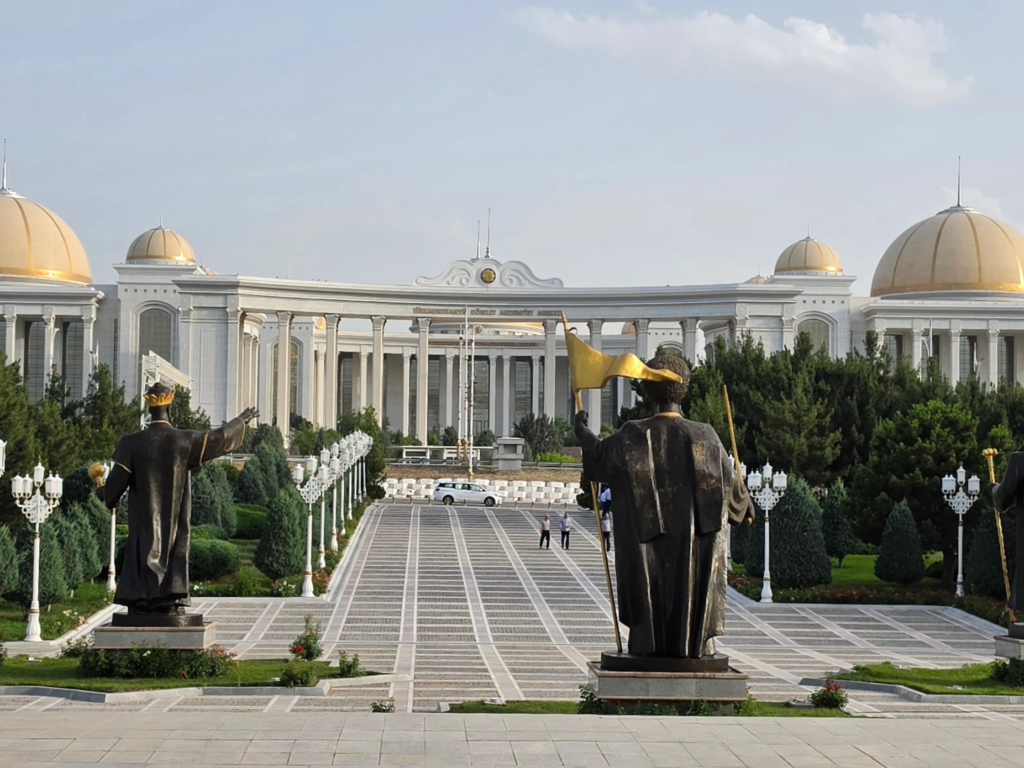
Independence Monument and Park
The symbol of modern Turkmenistan, set in a long park lined with golden statues of national heroes, poets and warriors. Come in daylight for photos, or after dark when the whole park is lit up.

Neutrality Monument
A tall three-legged tower topped by a golden statue, celebrating the neutrality Turkmenistan declared in 1995. It stands on the southern edge of the city, with the Kopetdag mountains behind it.

Ertugrul Gazi Mosque
One of the most elegant buildings in the capital, inspired by Istanbul's Blue Mosque, with white domes, slender minarets and a bright, carpeted prayer hall. Dress modestly to go inside.

Turkmenbashi Ruhy Mosque
The largest mosque in Central Asia, with a golden dome, four minarets and a vast marble prayer hall under huge chandeliers. It stands in Gypjak, just west of Ashgabat, and pairs well with a visit to Nisa.

Old Nisa
The ruins of a Parthian royal fortress from the 3rd century BC, on a hill at the foot of the Kopetdag. Walk among mud-brick walls and the remains of ceremonial halls, with wide views over the plain. Nisa guide →
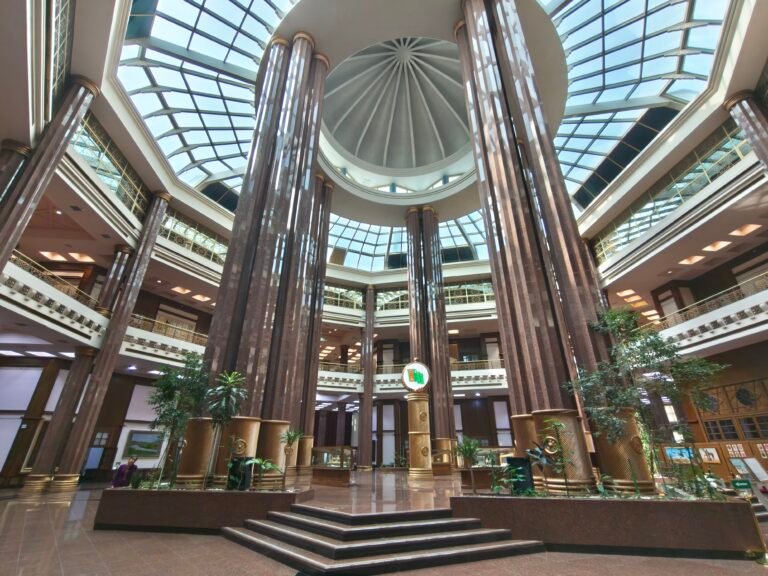 Open by day
National Museum of Turkmenistan
The best place to understand the country's past: finds from Nisa, Merv and Gonur Depe, ancient ivory drinking horns and traditional carpets and jewellery, all in a grand marble building.

Wedding Palace (Bagt Köşgi)
A striking eight-pointed star with a giant globe on top, where many Ashgabat couples get married. There is little to see inside, so most visitors come in the evening to photograph it lit up.

Alem Entertainment Centre
Home to the world's largest indoor Ferris wheel, listed in the Guinness World Records. Take a ride for a bird's-eye view over the white-marble city and the Kopetdag mountains beyond.

Akhal-Teke horse farm
Meet Turkmenistan's national symbol: the Akhal-Teke, famous for its shining golden coat. A visit to a horse farm on the edge of the city is a welcome break from the marble and a favourite with photographers. Akhal-Teke guide →
Short on time? The first three fit into a half day, and the night views are best saved for the evening.
Ashgabat at Night
When the sun goes down, Ashgabat becomes a different city. Monuments, fountains and marble façades light up in white, gold and blue, the wide avenues grow quiet and the air cools after a hot day.
For many travellers, the evening drive through the illuminated capital is the moment they remember most.
- Best time: right after sunset, for about 1–2 hours.
- Highlights: Independence Park, the Neutrality Monument and the Wedding Palace.
- Easy to add: combine it with dinner on your arrival day or your last evening.


A Day in Ashgabat: Sample Route
This is how a typical full day in Ashgabat looks with our guide. The order changes with opening hours, the weather and your interests — and if you arrive in the afternoon, we simply start with the evening part.
ⓘ Only half a day? Keep steps 1–3 and finish with the evening lights.
-
Independence Monument and Park
Start in the morning, when the light is soft and the golden statues and fountains look their best.
-
Neutrality Monument
Drive to the tall tower on the southern edge of the city, with the Kopetdag mountains behind it.
-
Ertugrul Gazi Mosque
See the Ottoman-style domes and the bright, carpeted prayer hall in the city centre.
-
Lunch at a Turkmen restaurant
Take a break with plov, shashlik and fresh bread.
-
National Museum, Alem or a bazaar
Spend the afternoon on history, a ride on the Ferris wheel or local shopping — it's your choice.
-
The city lights
After sunset, see the Wedding Palace and the illuminated monuments, then head to dinner.
Where to Go Next from Ashgabat
Food and Where to Eat in Ashgabat
Turkmen food is hearty and simple: lamb, rice, fresh bread and plenty of tea. During the tour your guide takes you to tried-and-tested local restaurants, so you can taste the real thing without guessing.
What to tryPlov
Rice slowly cooked with lamb, carrots and onions in a big cast-iron pot.
Dograma
The national dish: torn bread soaked in rich meat broth with onions and tomatoes.
Manty
Steamed dumplings filled with minced meat and onion.
Shashlik
Skewers of lamb, beef or chicken grilled over charcoal.
Gutap
Thin crispy pastries filled with meat, greens or pumpkin.
Chorek
Round Turkmen bread baked in a clay tandoor oven, served with every meal.
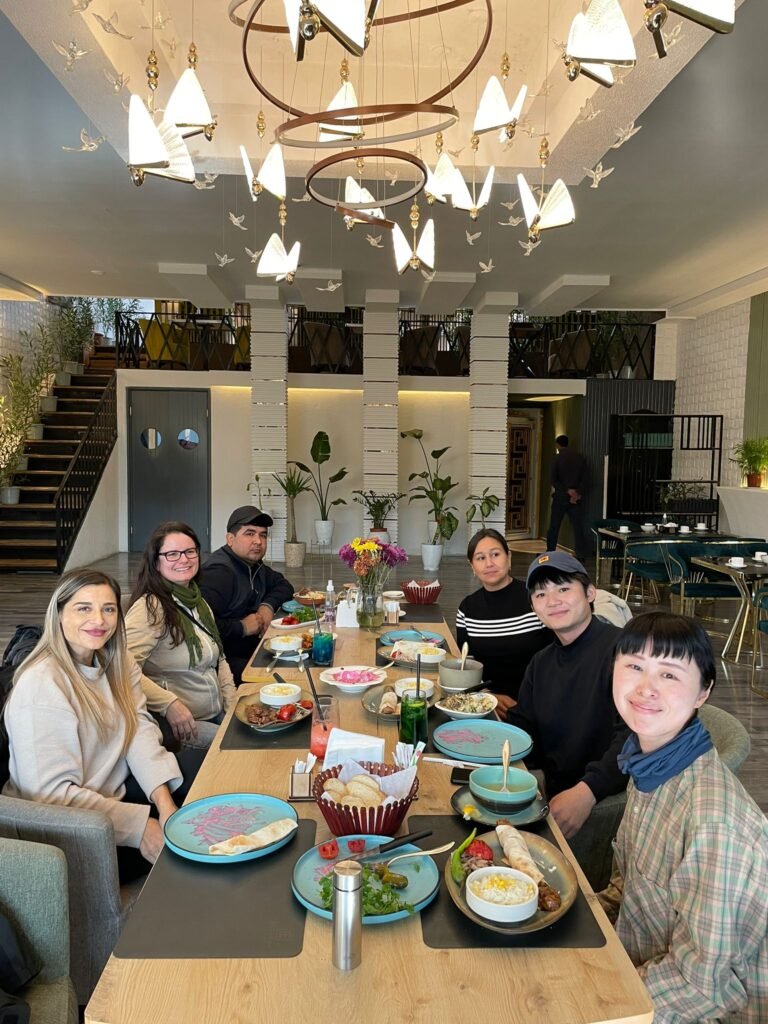
Where to eat
Traditional Turkmen food at well-known local restaurants:
The city centre also has modern cafés and bakeries for coffee and something sweet between sights.
Vegetarian? Options are more limited, but most restaurants can prepare meat-free dishes on request. Tell us in advance and your guide will plan meals around it.
Bazaars
Russian Bazaar (Gulistan) in the city centre is the place for dried fruit, nuts, sweets and spices — and a lively slice of everyday life.
Altyn Asyr Bazaar, the largest market in the country, is shaped like a Turkmen carpet when seen from above and sells everything from carpets and textiles to souvenirs.
Practical Tips for Visiting Ashgabat
Photos are welcome, with one exception
Take as many photos as you like at monuments, parks, mosques and bazaars. Just don't photograph government buildings or police officers. If you're not sure, ask your guide.
Bring US dollars in cash
The local currency is the Turkmen manat, and international bank cards are rarely accepted. Bring clean, undamaged US dollar notes and exchange money at official banks.
Dress modestly
Ashgabat is relaxed, but very revealing clothes are not appropriate. Keep shoulders and knees covered, especially when visiting mosques.
Your car is always with you
There is no need for taxis or buses: your driver and guide take you everywhere, from the airport to the last monument of the day.
Mobile internet is included
All our tours include mobile internet. Some international websites may not work, so download offline maps before you arrive.
Plan around the heat
Summer days in Ashgabat often go above 40°C. We plan sightseeing for the morning and evening, and drinking water is always in the car.
Tours that Visit Ashgabat
Ashgabat is part of almost every route we run — from short crossings between Uzbekistan and Turkmenistan to the full Grand Tour.

3-Day
Private / Small Group
3-Day Turkmenistan Tour from Khiva to Bukhara: Darvaza, Ashgabat & Ancient Merv
Available from: Khiva / Shavat
Cross Turkmenistan from Khiva to Bukhara in 3 days: Kunya-Urgench, a night at the Darvaza Gas Crater, white-marble Ashgabat and Ancient Merv.
1 traveler — US$ 1.173 pp
4+ travelers — US$ 632 pp
5-Day
Private / Small Group
5-Day Turkmenistan Tour from Khiva to Bukhara: Darvaza, Ashgabat & Ancient Merv
Available from: Khiva / Shavat
Cross Turkmenistan from Khiva to Bukhara: a night at the Darvaza Gas Crater, Ashgabat, Nokhur and the Kow-Ata underground lake, ancient Nisa and Merv.
1 traveler — US$ 1857 pp
4+ travelers — US$ 744 pp

4-Day
Private / Small Group
4-Day Tour: Farap → Shavat via Merv, Mary, Ashgabat & Darvaza
Available from: Bukhara / Farap
Explore Merv, Mary, Ashgabat and the Darvaza Gas Crater on a 4-day overland tour from Farap to Shavat, combining Silk Road history, city sightseeing and the Karakum Desert.
1 traveler — US$ 1311 pp
4+ travelers — US$ 734 pp
9-Day
Private / Small Group
9-Day Grand Turkmenistan Tour: Ashgabat, Yangykala, Koytendag, Merv & Darvaza
Available from: Ashgabat
Explore Turkmenistan from west to east on a 9-day expedition combining Yangykala Canyon, Koytendag’s dinosaur footprints, Ancient Merv, Ashgabat and the Darvaza Gas Crater.
1 traveler — US$ 3027 pp
4+ travelers — US$ 1698 pp

4-Day
Private / Small Group
4-Day Turkmenistan Tour: Bukhara → Merv → Darvaza → Ashgabat
Available from: Bukhara / Farap
Travel from Bukhara through the Farab border on a 4-day private journey combining Ancient Merv, Ashgabat, the Darvaza Gas Crater and a final departure from Ashgabat International Airport.
1 traveler — US$ 1228 pp
4+ travelers — US$ 659 pp
2-Day
Private / Small Group
2-Day Turkmenistan Tour: Shavat → Darvaza → Ashgabat
Available from: Khiva / Shavat
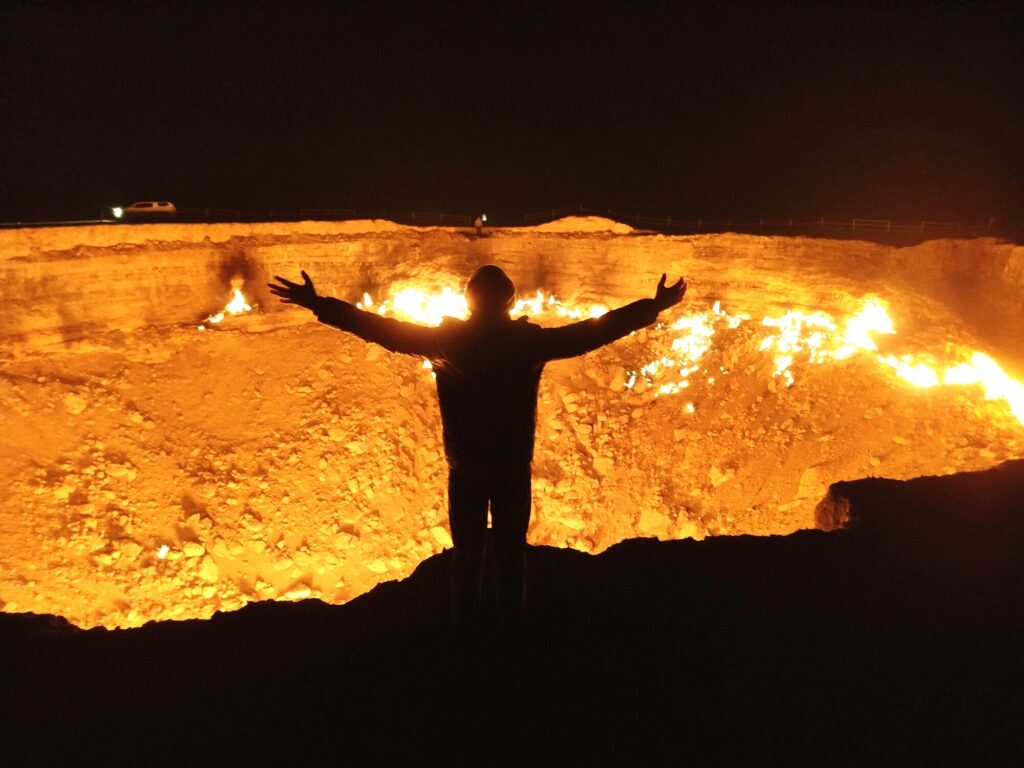
Travel from Khiva/Shavat to Ashgabat via Kunya-Urgench and Darvaza, including an unforgettable overnight stay near the Darvaza Gas Crater.
1 traveler — US$ 516 pp
4+ travelers — US$ 270 pp
Ashgabat: FAQ
How many days do I need in Ashgabat?
One evening is enough to see the illuminated monuments, and a full day covers the main sights. Plan two days if you also want to visit Nisa, the Turkmenbashi Ruhy Mosque in Gypjak and an Akhal-Teke horse farm.
Can I visit Ashgabat without a guide?
No. Independent tourism is not allowed in Turkmenistan, so visitors travel with a licensed local operator. We arrange your guide, driver, hotels and e-Visa support.
Can I take photos in Ashgabat?
Yes. You can photograph monuments, parks, mosques and bazaars freely. Just avoid government buildings and police officers — if you are not sure, ask your guide.
Is Ashgabat safe for tourists?
Yes. Ashgabat is a very safe, calm and clean city, and your guide and driver are with you throughout the tour.
What should I wear in Ashgabat?
Dress modestly and avoid very revealing clothes. Keep shoulders and knees covered, especially when visiting mosques.
How far is Darvaza from Ashgabat?
About 270 km — a 3.5 to 4.5-hour drive north through the Karakum Desert. We travel by 4x4 and spend the night in a yurt camp next to the crater. Read our Darvaza guide.
When is the best time to visit Ashgabat?
Spring (April–May) and autumn (September–November) are the most pleasant. Summer days often go above 40°C, so sightseeing is planned for the morning and evening.
What currency is used in Ashgabat?
The Turkmen manat. International bank cards are rarely accepted, so bring clean US dollar notes and exchange money at official banks.
Plan Your Trip to Turkmenistan
Want to See Ashgabat with a Local Guide?
Tell us your dates and route, and we'll suggest how much time to spend in the capital and what to combine it with.