

CENTRAL ASIA TRAVEL BLOG
UNESCO World Heritage Sites in Turkmenistan: Merv, Kunya-Urgench & Nisa
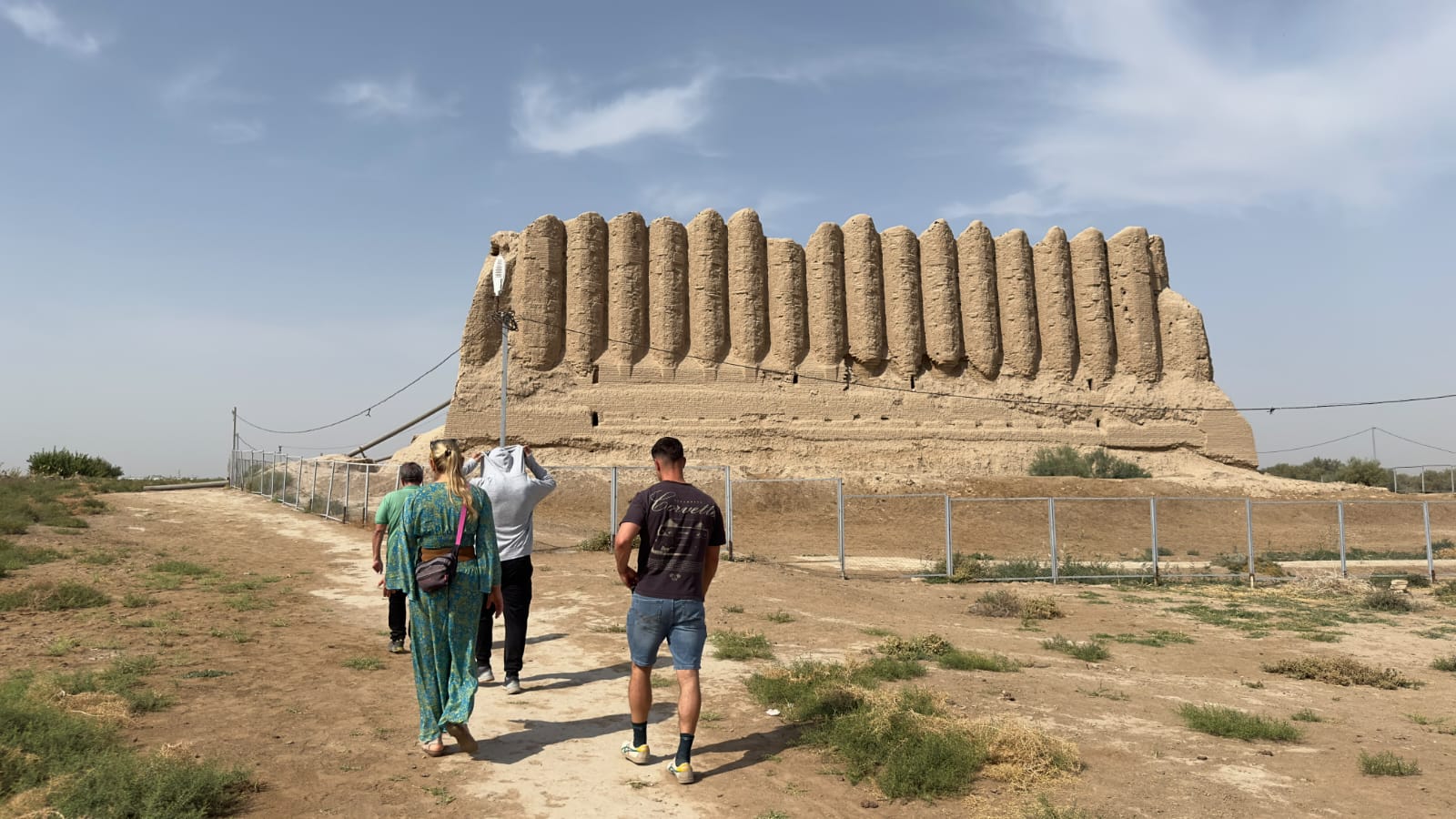
Turkmenistan is home to some of the most remarkable ancient cities of the Silk Road. Mud-brick fortresses, turquoise-tiled mausoleums and Parthian ruins stand in the desert much as they have for centuries, and you can often explore them in near solitude.
In this guide, our local team introduces each of Turkmenistan's UNESCO World Heritage Sites: what makes them special, what you will see, how to reach them and how much time to allow. We visit these places with travellers every week, so we have also included the small practical tips that make a visit more enjoyable.
Quick answer
Turkmenistan has five UNESCO World Heritage Sites. Three of them can be visited as single destinations: Ancient Merv (1999), Kunya-Urgench (2005) and the Parthian Fortresses of Nisa (2007). Two more were added in 2023 as cross-border sites shared with neighbouring countries: the Zarafshan-Karakum Corridor of the Silk Roads and the Cold Winter Deserts of Turan.
Turkmenistan's UNESCO Sites at a Glance
Ancient Merv: The Great Oasis City of the Silk Road
For centuries, Merv was one of the great cities of the Islamic world, and in the 12th century it was among the largest cities anywhere. Today its ruins spread across a wide desert landscape, with fortress walls, citadels and mausoleums from different eras standing side by side. It is the oldest and largest of Turkmenistan's historic sites, and for many travellers the most atmospheric.


The Askhab Mausoleums after dark and the great dome of Sultan Sanjar.
What you will see
- Erk Kala and Gyaur Kala, the oldest parts of the city, with earthen walls you can walk along for wide views of the oasis.
- Mausoleum of Sultan Sanjar, a 12th-century masterpiece whose huge brick dome has survived earthquakes and invasions.
- Great and Little Kyz Kala, two striking fortified houses with deep, corrugated mud-brick walls, unlike anything else in Central Asia.
- Askhab Mausoleums, a peaceful place of pilgrimage that local families still visit today.
Getting there
About 30 km from Mary
Around 4 hours from Ashgabat by the new highway.
Best time of day
Morning or late afternoon
The site is open and exposed, with little shade.
Good to know
Distances are large
You move between monuments by car, with short walks at each.
Kunya-Urgench: The Old Capital of Khorezm
Kunya-Urgench was once the capital of the powerful Khorezm state and one of the richest trading cities of the region, until it was destroyed during the Mongol invasion in the 13th century. What remains is a scattered collection of beautiful monuments set among quiet fields and old cemeteries. It is also an important place of pilgrimage, so you will often share the paths with local families.
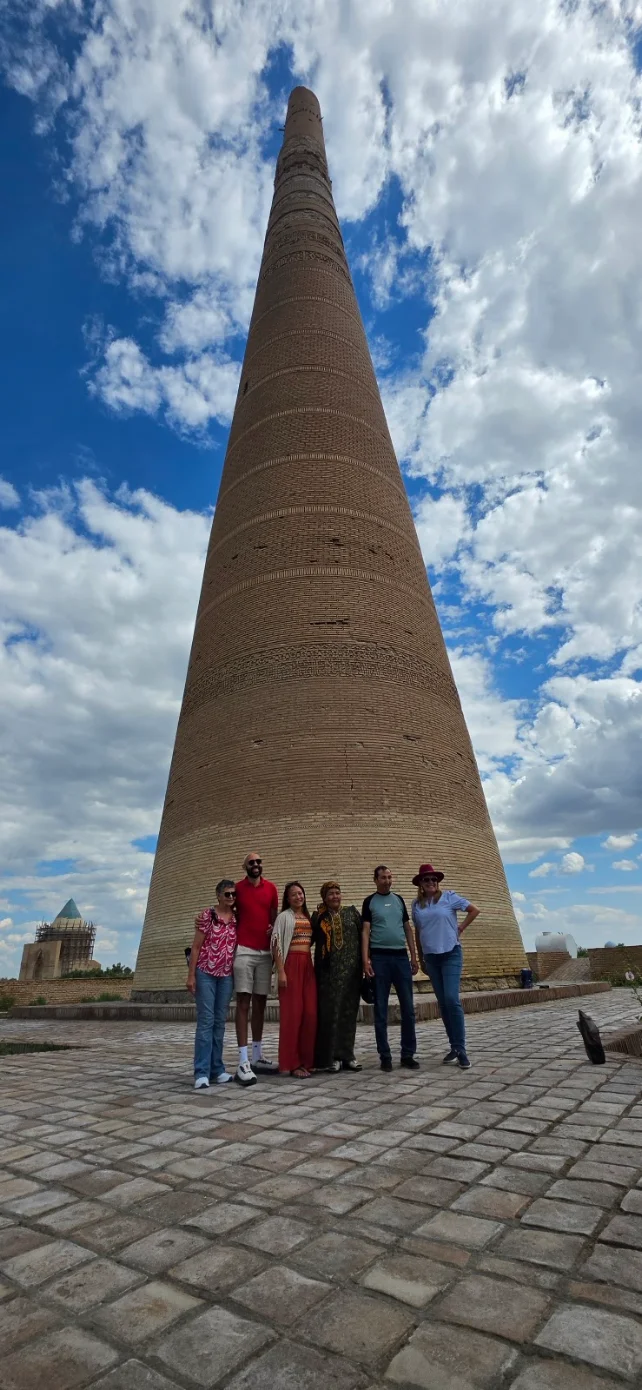

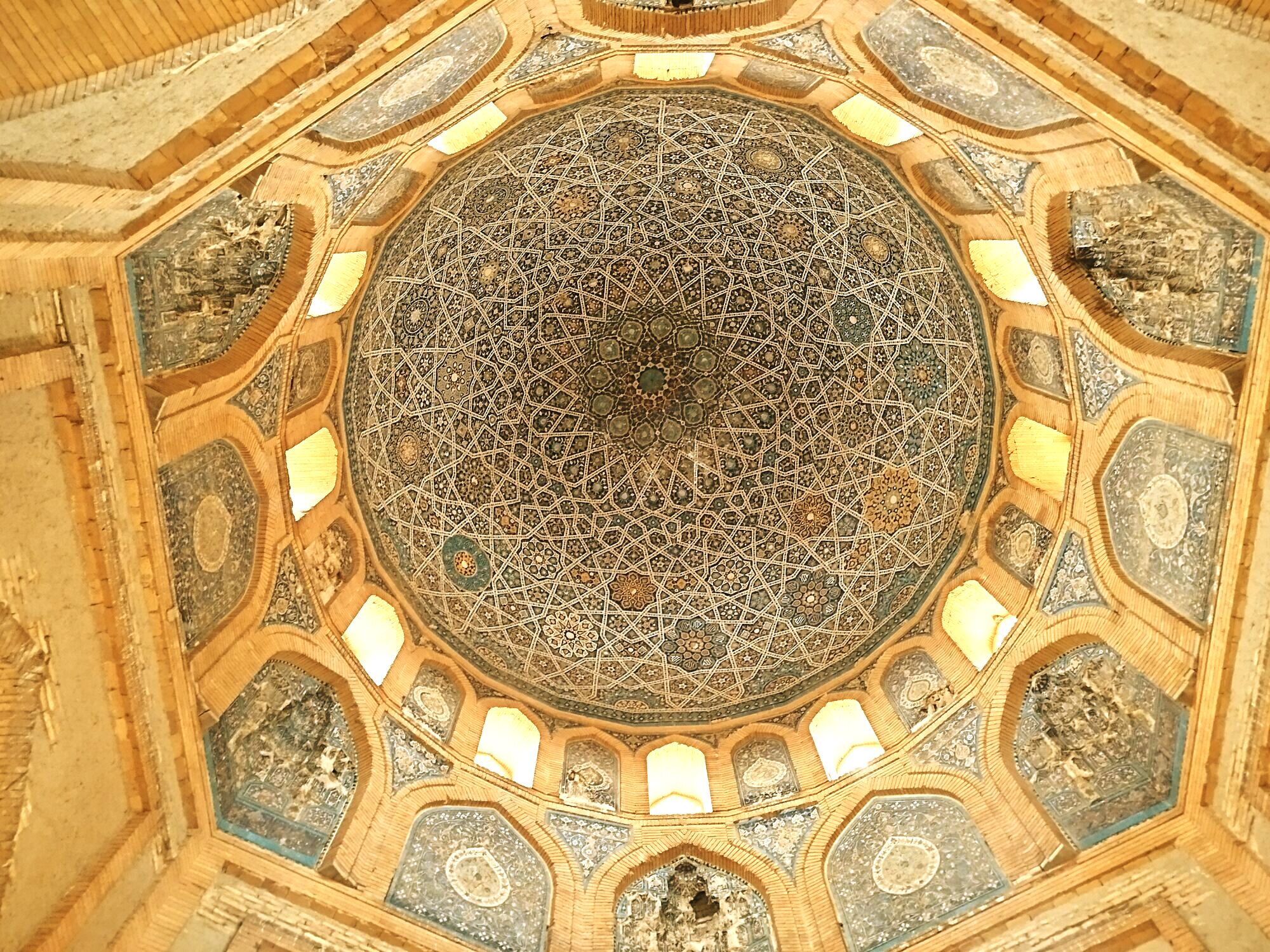
The Kutlug Timur Minaret and the Turabek Khanym Mausoleum, inside and out.
What you will see
- Kutlug Timur Minaret, around 60 metres tall and one of the tallest medieval minarets in Central Asia.
- Turabek Khanym Mausoleum, famous for its richly patterned dome. Look up when you step inside.
- Mausoleums of Tekesh and Il-Arslan, with their distinctive conical and ribbed domes from the 12th century.
- Najm ad-Din Kubra complex and Kyrk Molla, peaceful sacred sites that show how alive local traditions still are.
Getting there
About 100 km from Dashoguz
Close to the Shavat border, so it is easy to visit if you are coming from Khiva.
Best time of day
Any time
Morning light is especially beautiful on the minaret.
Good to know
A place of pilgrimage
Dress modestly and move quietly near the shrines.
Parthian Fortresses of Nisa: An Ancient Capital Next to Ashgabat
Nisa was one of the earliest capitals of the Parthian Empire, a power that rivalled Rome more than two thousand years ago. From the top of the fortress you look out over the ruins of palaces and temples, with the Kopetdag Mountains rising behind. It is the easiest UNESCO site to visit, just a short drive from the capital, and a wonderful contrast to the modern white-marble city.


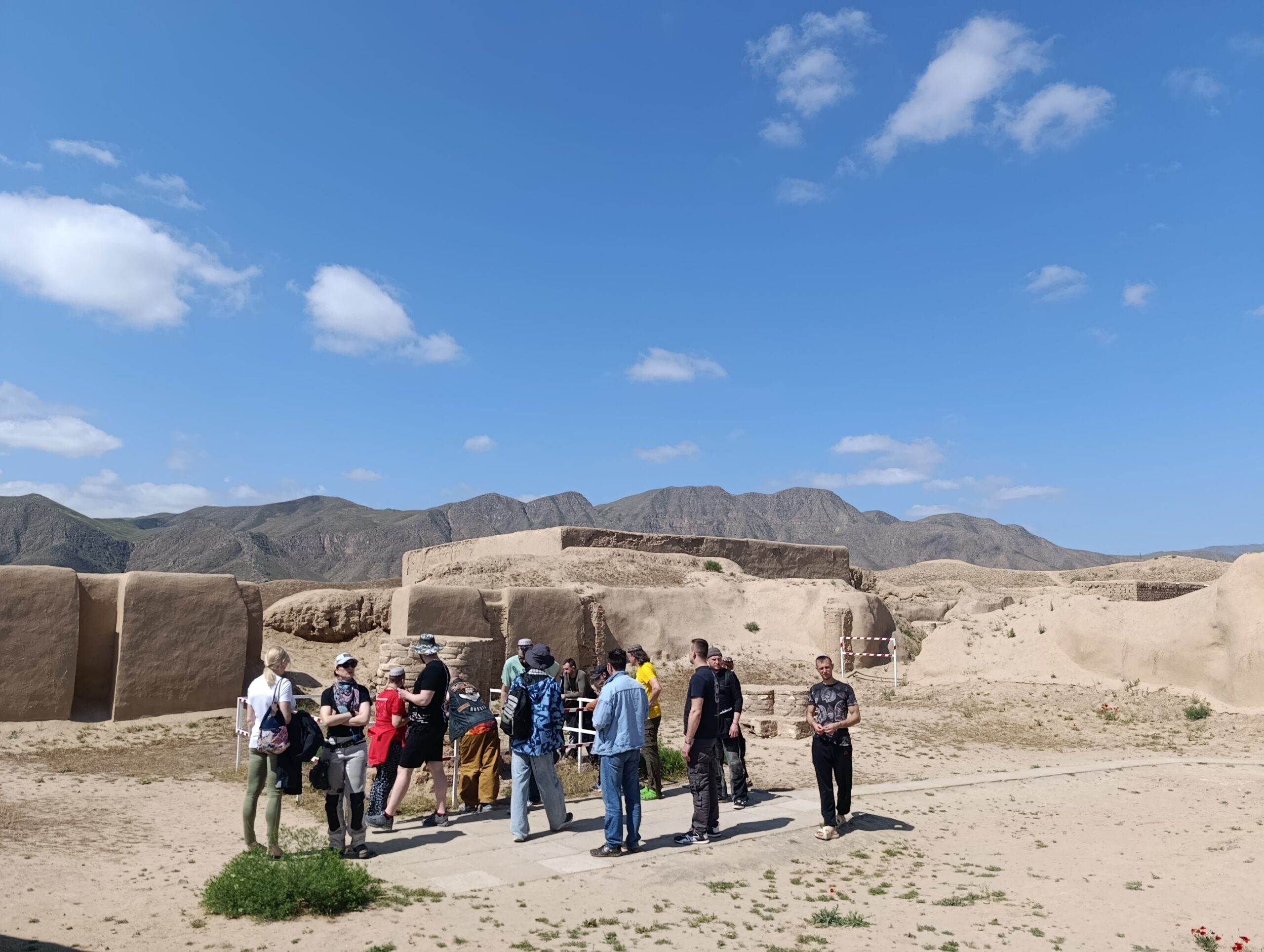
Old Nisa below the Kopetdag Mountains, the walls of the royal palace and a guided walk through the site.
What you will see
- Old Nisa, the royal fortress, with the remains of ceremonial halls, temples and storerooms inside its walls.
- Restored columns and walls that help you picture the original scale of the buildings.
- Panoramic views of the plain and the mountains on the border with Iran, especially lovely in the morning.

Many of the most precious finds from Nisa are displayed in the National Museum in Ashgabat, including carved ivory drinking horns and pottery shards inscribed in Parthian script, which tell us about the wine stores of the royal estate. Seeing them after a morning at the fortress makes the two visits a lovely pair.
Getting there
20–30 minutes from Ashgabat
Easy to add to an Ashgabat city tour.
Best time of day
Morning
Clear mountain views and cooler air.
Good to know
Uneven ground
Comfortable shoes help on the earthen paths and slopes.
Two Newer Additions and Sites on the Tentative List
In 2023 two cross-border sites that include parts of Turkmenistan were added to the World Heritage List. They are not single places you visit for an afternoon, but you will see their landscapes on many journeys through the country.
Cultural · 2023
Silk Roads: Zarafshan-Karakum Corridor
A historic stretch of the Silk Road shared with Uzbekistan and Tajikistan, linking the Zarafshan Valley and Bukhara with Merv across the Karakum Desert. If you travel overland from Bukhara via the Farap border towards Merv, you follow the line of this ancient caravan route.
Natural · 2023
Cold Winter Deserts of Turan
A group of desert reserves shared with Kazakhstan and Uzbekistan, protecting the plants and wildlife of Central Asia's cold-winter deserts. In Turkmenistan it includes the Repetek reserve in the eastern Karakum.
Turkmenistan also has several places on UNESCO's Tentative List, including the dinosaur footprints, canyons and caves of the Koytendag Mountains in the far east, added in 2025 as a joint nomination with Uzbekistan. It is one of the most beautiful and least visited corners of the country.
How to See Merv, Kunya-Urgench and Nisa on One Trip
The three sites lie in different corners of the country: Nisa in the south next to Ashgabat, Merv in the south-east and Kunya-Urgench in the far north. The good news is that they fit naturally along the main overland route between Uzbekistan and Turkmenistan, so you can see all three in about five days without backtracking.
The route works just as well in reverse, starting from Bukhara. If you have only two or three days, Merv and Kunya-Urgench are easy to combine on a crossing between Bukhara and Khiva, and Nisa can be added whenever your trip includes a morning in Ashgabat. Our Turkmenistan itinerary guide compares routes of different lengths.
Tips for Visiting Turkmenistan's Historic Sites
- Go early or late. All three sites are open-air with little shade. Spring and autumn are the most comfortable seasons, and in summer the first hours of the morning are best. See our guide to the best time to visit Turkmenistan.
- Bring water, a hat and sunscreen, even on cooler days, as the desert sun is strong.
- Wear comfortable, closed shoes. Paths are mostly earthen and uneven, and the best views often involve a short climb.
- Respect the sacred places. Kunya-Urgench and the Askhab Mausoleums in Merv are active pilgrimage sites. Cover shoulders and knees, and ask before photographing local visitors.
- Please don't climb on the walls. The mud-brick structures are fragile, and staying on the paths helps protect them for future travellers.
- Let your guide tell the stories. On-site information boards are limited, and the history of these places comes alive with a local guide.
UNESCO Sites in Turkmenistan: FAQ
How many UNESCO World Heritage Sites does Turkmenistan have?
Turkmenistan has five UNESCO World Heritage Sites: Ancient Merv (1999), Kunya-Urgench (2005), the Parthian Fortresses of Nisa (2007), and two cross-border sites added in 2023, the Zarafshan-Karakum Corridor of the Silk Roads and the Cold Winter Deserts of Turan.
Which UNESCO site in Turkmenistan should I visit if I only have time for one?
Ancient Merv is the largest and most varied, with monuments spanning many centuries. If you are only in Ashgabat, Nisa is the easiest to reach, just 20–30 minutes from the city. If you are entering from Khiva, Kunya-Urgench is right on your way.
Can I visit all three historic UNESCO sites in one trip?
Yes. Merv, Kunya-Urgench and Nisa fit naturally along the overland route between Khiva and Bukhara through Turkmenistan, and you can comfortably see all three in about five days.
How far is Ancient Merv from Ashgabat?
Ancient Merv lies about 30 km from the city of Mary. From Ashgabat, the drive takes around four hours on the new highway, so most travellers spend the night in Mary or continue towards the Uzbek border.
Do I need a guide to visit these sites?
Visitors to Turkmenistan travel with a licensed local guide, which also makes visiting the historic sites much easier, as your guide arranges transport and tickets and shares the history behind each monument.
Planning to see Turkmenistan's ancient cities?
We are always happy to help, whether you are still dreaming about the trip or already have dates. Tell us how many days you have and where you are travelling from, and our local team will suggest a route that suits you.
More Turkmenistan travel guides